Team safeguards sacred mountain's green heritage for future generations
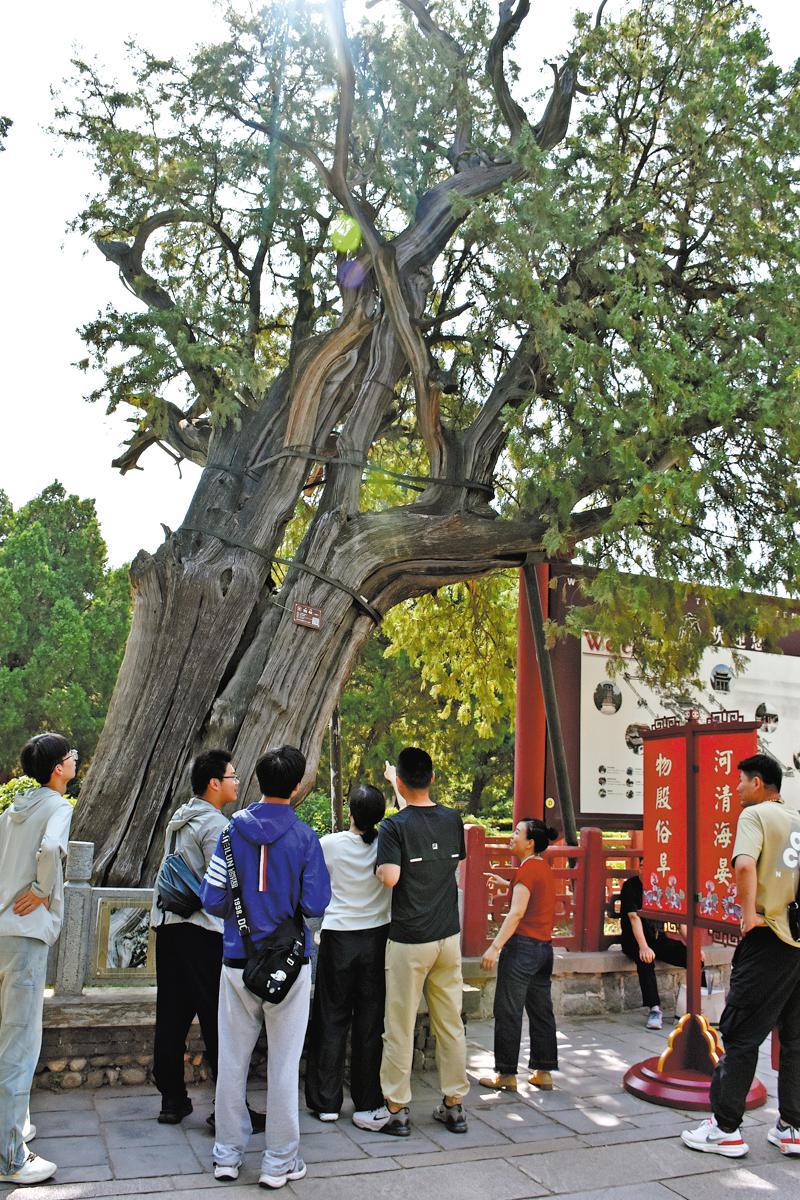
Tourists admire the Dai Temple's Interlocked Han Cypress at the foot of Taishan Mountain. [Photo provided to CHINA DAILY]
For over 300 years, visitors to the Dai Temple at the foot of Taishan Mountain in Shandong province have been able to find natural respite under the canopy of the great ginkgo tree in the temple courtyard.
Despite its age, the lofty 20-meter-tall tree still remains lush and vibrant, thanks in part to some major tree surgery performed just over a decade ago.
The aftermath of the surgery can still be observed today, with a dozen younger root systems grafted to the base of its trunk. These young roots, each originally a separate sapling, seamlessly integrate with the main trunk before plunging into the soil to nourish their elder.
This root-grafting technique, where juvenile root systems are surgically connected to ancient ginkgo trees, is part of efforts by technicians at the Taishan Mountain Scenic Area Administrative Committee to protect the area's many ancient trees.
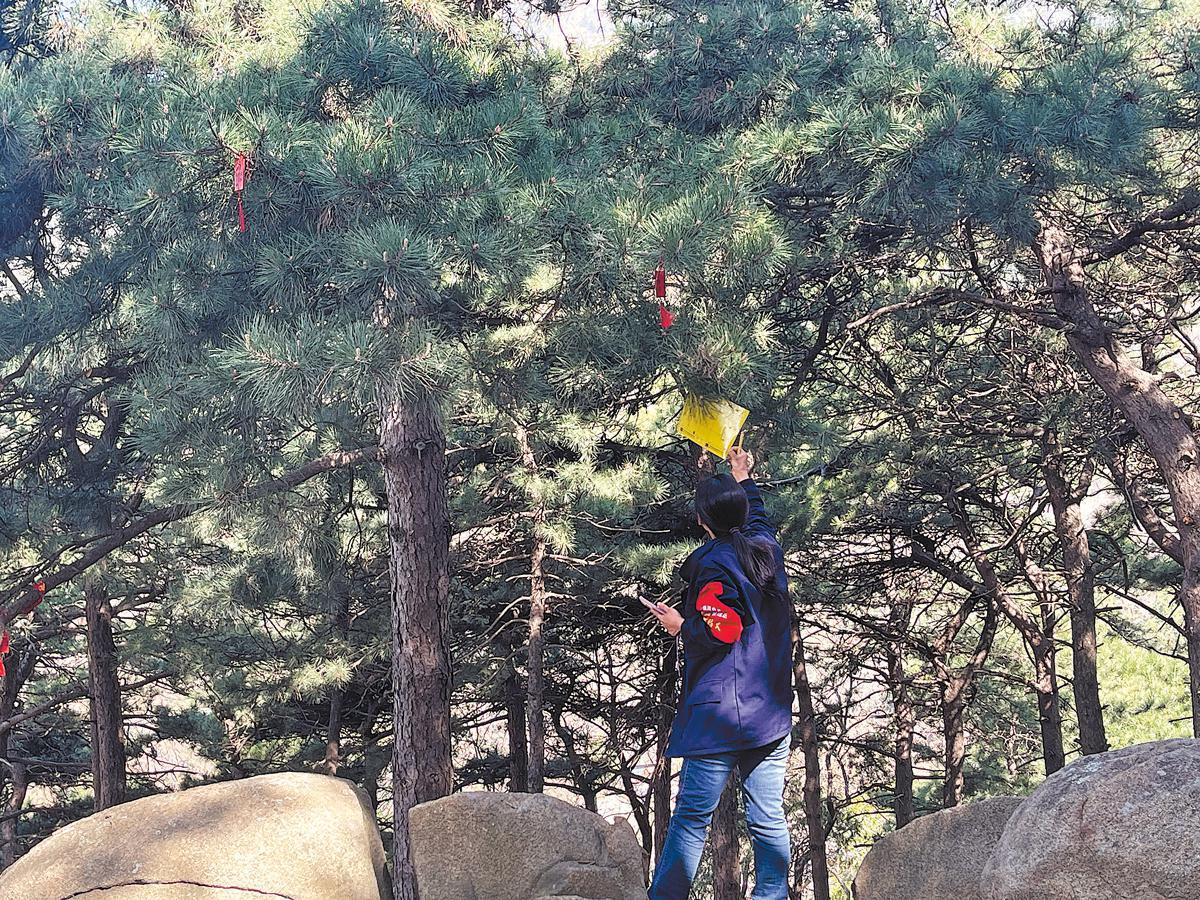
A protection worker ties an information tag onto an ancient tree. [Photo provided to CHINA DAILY]
As China's first UNESCO World Cultural and Natural Heritage Site listed in 1987, Taishan Mountain is home to 18,195 ancient trees across 39 species. Among these are 23 individual trees that hold the rare distinction of being listed as World Heritage elements, serving as living monuments to China's ecological and cultural legacy.
A key element to the preservation of the mountain's ancient trees has been human devotion spanning generations. For decades, dedicated people in the local community have worked to protect these living monuments, ensuring that each of the mountain's ancient trees receives the care it needs to thrive for centuries more.
In recent years, the scenic area's committee has established a comprehensive and scientifically driven management system, which has transformed the mountain into a global model for conserving heritage trees.
The management system aims to ensure light penetration through the canopy, optimal airflow around the trunk, and efficient oxygen in the root zone through loose and porous soil, said Shen Weixing, director of the committee's heritage protection department.
"We also need to pay detailed attention to the trunk and roots, as well as control pests and diseases and prevent fire," he said.
"This system optimizes the trees' growing conditions — balancing soil nutrients, water, air and light — so they can live longer and healthier," he said, adding that each tree has its own unique needs.
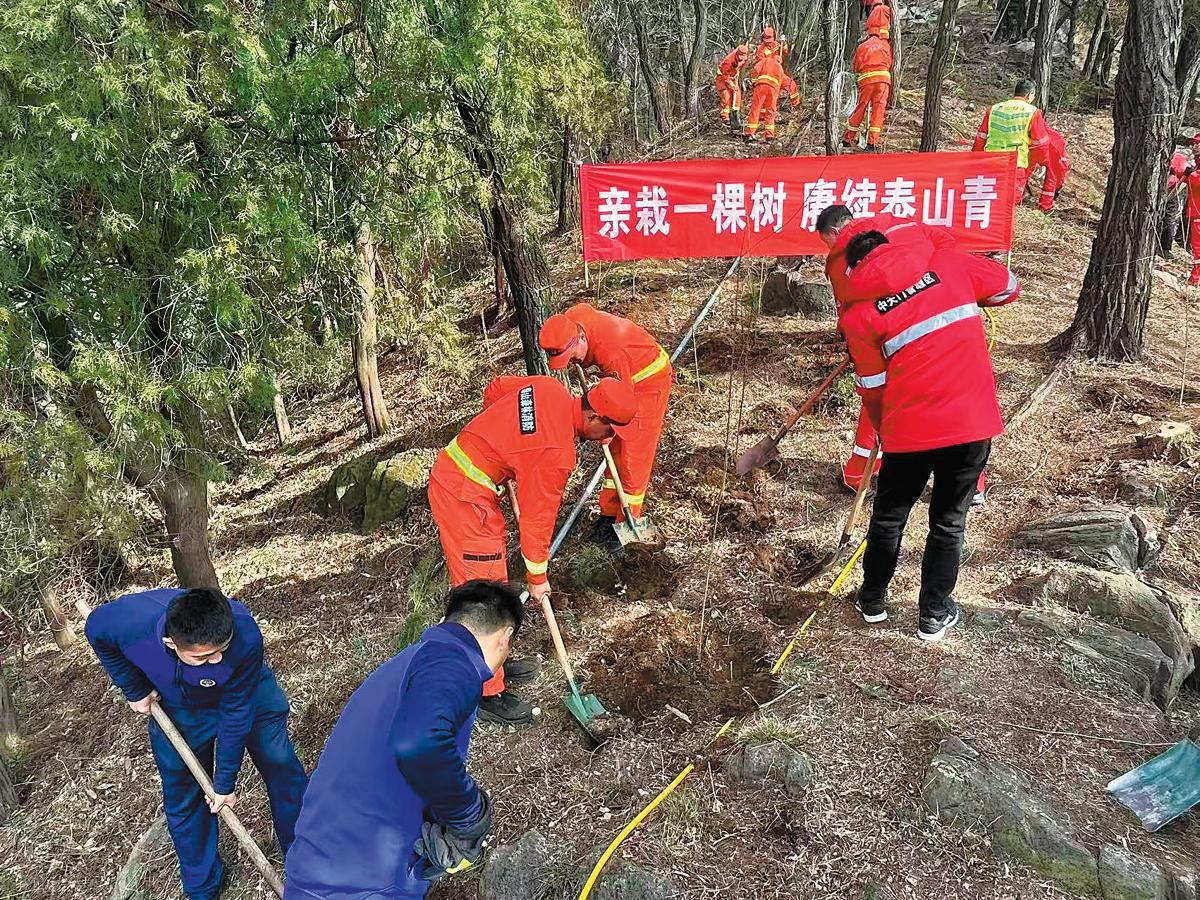
Workers in the Taishan Scenic Area, as well as local forestry rangers and firefighters plant trees on the mountain. [Photo provided to CHINA DAILY]
Old trees, new life
"When a tree declines, its roots fail first," said Ma Shengping, who has worked in the committee since 1985 after graduating from Shandong Agricultural University's pomology program, which focuses on the study and cultivation of fruit-bearing plants.
In 2012, they noticed the leaves of a 300-year-old ginkgo tree at the Dai Temple were turning a sickly yellow-gray months before autumn, not the usual vibrant gold of seasonal change.
"After fact-finding and research work, we found the root system was collapsing like a failing heart," said Ma.
In April 2013, they planted 21 four-year-old ginkgo saplings around the ailing tree. Then, using precision grafting techniques, they connected the saplings to the ancient trunk.
"It's like attaching life support," said Ma, who added that the young trees became auxiliary roots, pumping nutrients to their elderly host.
By that September, new emerald leaves had replaced the withering foliage.
Using this method, they have since saved two other ancient ginkgos.
"Initially, nobody dared try this on heritage trees," said Ma. "But when you see leaves returning to health, you know it's worth the risk."

Cao Guiping (left) and a colleague check seedlings cultivated on Taishan Mountain. ZHAO RUIXUE/CHINA DAILY
Seedling cultivation
At Colorful Stone Creek, also at the foot of Taishan, Cao Guiping and her team are cultivating the seedlings of the mountain's rarest species — the Taishan mountain ash, a tree species unique to the mountain.
Found 1,120 meters up the mountain's northwestern cliffs, this unassuming tree was first spotted in 1984 by Li Fazeng, a professor at Shandong Normal University, while he surveyed the botanical inventory of the mountain.
Its serrated leaves and ruby-hued berries distinguished it from common mountain ash, leading to its classification in 1986 as a species unique to the mountain, which was also the only one of this species in the world, Cao said.
"It's not easy for its seeds to sprout where they fall, so if we want to have more trees of this species, we need to nurture seeds into seedlings," she said. To rescue the species, the team collected its seeds and started to cultivate the seedlings.
"Every November, we ascend the mountain to collect seeds — the timing is critical, as even slight variations can significantly impact seed quality."